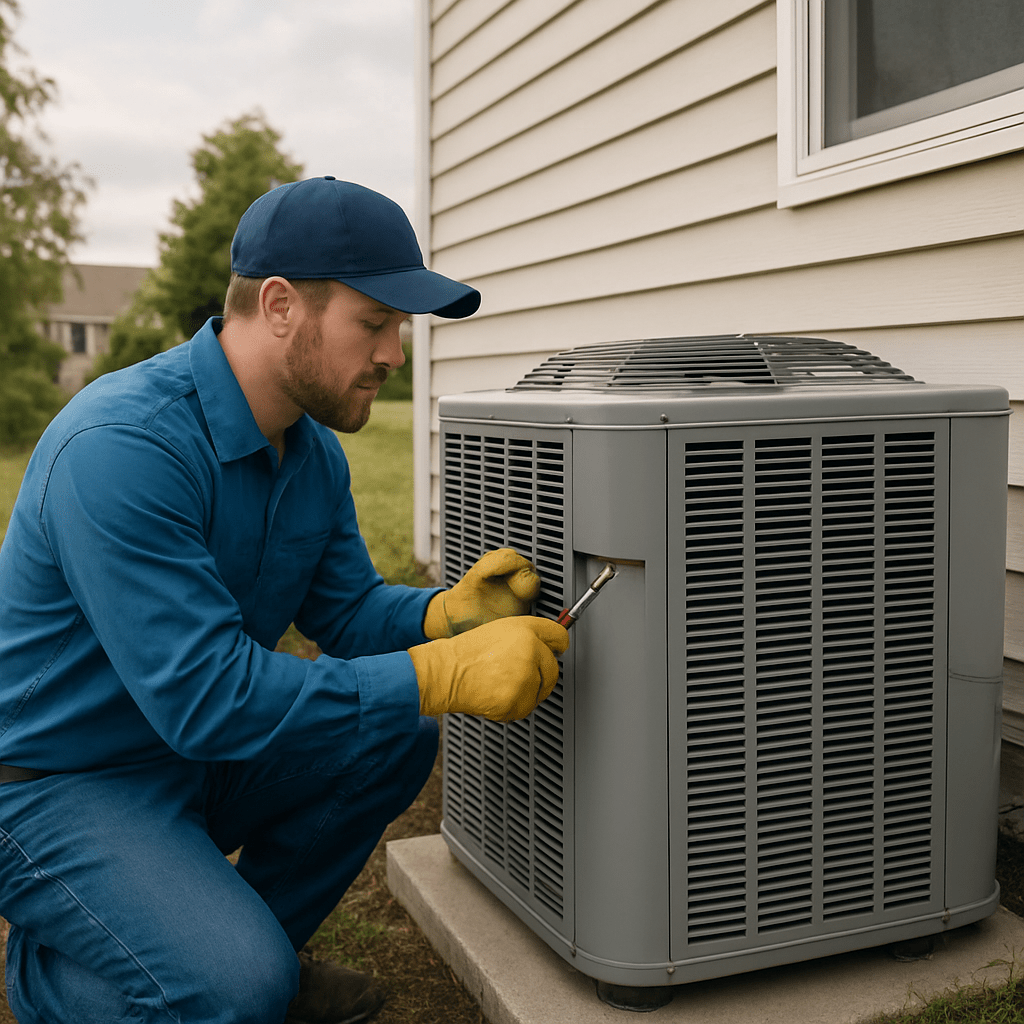
Choosing the wrong hvac pros can cost you comfort, efficiency, and thousands in repairs – especially with Lehigh Valley winters and humid summers. This guide gives homeowners in Lehigh and Northampton County a practical checklist of questions and evaluation steps to verify certifications, insurance and permits, compare written estimates, and set realistic emergency response expectations. It also includes sample phone scripts and local examples you can use when requesting bids.
Verify Credentials and Technician Certifications
Start here: insist on technician-level proof before you schedule work. Ask which technician will be on site and demand to see their credentials when they arrive — not just the company business card. For homeowner decisions in Lehigh Valley, hvac pros who can produce up-to-date, verifiable certifications materially reduce installation and refrigerant-handling risk.
NATE matters for competence but check the details. NATE certification indicates an individual has passed industry-standard tests; it correlates with better installation outcomes. When a contractor claims NATE-certified techs, ask for the technician name and test date and confirm against the credential or on the NATE site. A certificate from 2010 is not the same as one renewed or issued in the last few years.
EPA Section 608 is mandatory for refrigerant work. If your job involves air conditioning or heat pump refrigerant, the technician must hold EPA Section 608 certification. Ask which Section 608 type they hold (Type I, II, III, or Universal) and request a copy of the card. You can lean on EPA guidance at EPA Section 608 when a contractor seems evasive — mishandled refrigerant is both illegal and expensive to fix.
Manufacturer factory training affects warranties and accountability. Being a Carrier, Trane, Lennox, Daikin, or Mitsubishi authorized installer often means the installer has logged factory training and warranty registration privileges. That makes warranty claims smoother. Tradeoff: authorized dealers sometimes charge a premium. Smaller local HVAC professionals may be excellent at field work but may not carry dealer status — weigh faster local response against potential warranty friction.
Practical verification and what to request
- On the phone: Which technician will handle my job, and are they NATE certified? Can you give me the techs names so I can verify credentials on arrival?
- For refrigerant work: Do your techs hold EPA Section 608 certification? Which type – II, III, or Universal? Please email a photo of the card before the appointment.
- Warranty impact: Are you a factory-authorized installer for the proposed equipment, and will you register the equipment with the manufacturer?
- Verification request: Please send a certificate of insurance and the technician names I should expect on site.
Concrete Example: A homeowner in Allentown scheduled an AC swap. The contractor emailed the assigned techs names, a photo of one NATE card dated last year, and a note that they are a Carrier dealer. That saved time on arrival and meant the homeowner could confirm the right tech stepped into the attic to inspect ductwork. The dealer status also ensured the unit would be registered for a manufacturer labor warranty.
Judgment: certifications are necessary but not sufficient. Credentials reduce risk; they do not replace local references, a clear written scope, or verifying that the named technician actually does the work. If a contractor resists naming the technician or producing a card, treat it as a real red flag — competent local hvac pros have nothing to hide.
Confirm Insurance, Bonding, and Local Permits
Do not proceed without current proof of insurance and a clear permit plan. If an HVAC pro cannot or will not show a live certificate of insurance (COI) and a permit workflow, stop the conversation. Homeowner liability, denied claims, and failed municipal inspections are common consequences when those items are left vague.
Know the difference: insurance covers damages, a bond covers performance shortfalls. General liability and workers compensation protect you if a worker is injured or property is damaged. A performance or surety bond guarantees work completion or compensation if the contractor walks—useful on larger replacements or when the contractor asks for big deposits.
How to verify and what to demand
Ask for a COI showing insurer name, policy number, coverage limits, and effective dates. Call the insurer using a number you look up independently and confirm the policy number and expiry. Request the contractor list the township or municipality as the certificate holder for permit work if required. Watch for photocopied COIs with altered dates; that is a red flag.
Permits: who pulls them matters. Letting a contractor pull permits is acceptable if they have a track record in your municipality and will provide the permit number before work starts. If a contractor asks you to pull permits, treat that as a warning sign unless you understand the local process and accept the accountability tradeoff.
Concrete Example: A homeowner in Bethlehem agreed to a furnace swap before confirming permits. At final inspection the township found an unpermitted gas connection; the homeowner paid for a retrofit and a re-inspection. The project cost 20 percent more than the original bid and delayed resale paperwork. Verifying the permit plan up front would have avoided both costs.
| Document | Why it matters / How to verify |
|---|---|
| Certificate of Insurance (COI) | Shows general liability limits and policy dates. Verify by calling the insurer and asking for policy confirmation using the policy number. |
| Workers Compensation | Protects you from wage and medical claims if a worker is injured. Confirm the policy is active and covers the crew working at your address. |
| Performance/Surety Bond | Useful on larger jobs or when an advance payment is required; ensures completion or compensation. Request bond number and issuer contact. |
| Permit plan / Permit number | Proof that work will be inspected and code-compliant. Confirm who pulls the permit and call the local building office to verify permit issuance if you doubt it. |
If work proceeds without a permit, insurers can refuse claims and municipal authorities can require costly corrective work — do not assume ignorance will be forgiven at final sale.
Practical judgment: For routine replacements in Lehigh Valley, prefer local hvac pros who pull permits themselves and have a documented history with your township. The convenience of a contractor handling permits usually outweighs the small markup required for their administrative work, but insist on the permit number before payment beyond a small deposit.
Sample email to request insurance and permit details
Hello, please email a current Certificate of Insurance showing general liability and workers compensation with policy numbers and effective/expiration dates. Also confirm whether you will pull the required permits, and if so provide the permit number or the expected date it will be submitted. If a bond is available for my job, include the bond issuer and bond number.
Next consideration: once insurance and permits are confirmed, move on to checking local references and getting a written scope so the paperwork you verified maps directly to the work you expect.
Evaluate Experience, Local Track Record, and References
Start with demonstrable local experience. For Lehigh Valley jobs the most useful signal is not marketing copy but a contractor who can point to several recent projects in your town, provide contactable homeowners, and show the permit numbers or photos tied to those jobs. That combination tells you the crew understands local inspection quirks, seasonal demand peaks, and typical fuel-system issues in Allentown, Bethlehem, and Easton.
Practical tradeoff: extensive local work usually means faster emergency response and smoother inspections, while a national call center may offer lower headline prices but slower, inconsistent field follow up. Choose local track record when repair windows and resale paperwork matter; consider a larger provider only if they document strong local field performance.
Reference checks that actually prove something
- Ask for three recent jobs in your municipality – request the homeowner name, phone, and the permit number or inspection reference. Acceptable response: two reachable contacts and permit numbers you can verify with the township building office.
- Request before and after photos plus a final sign off – photos that show attic work, duct connections, and a labeled condensate/drain run are concrete proof of workmanship. Acceptable response: timestamped images or an online project album.
- Call one recent reference and one older reference – ask about punctuality, cleanliness, whether the crew left instructions, and if any callbacks were handled promptly. Acceptable response: a reference who says the crew returned within a week for a warranty touch-up.
Concrete Example: A property manager in Easton vetted two hvac pros. One provided five jobs in the borough with permit numbers and photos showing duct sealing. The other supplied generic testimonials with no local details. The manager called two permit numbers with the township and chose the first contractor because the permit timeline matched the contractor claim and past customers confirmed timely follow up.
What you will uncover and what to distrust. Patterns matter more than single glowing reviews. Multiple complaints about missed appointments, unexplained change orders, or poor cleanup indicate systemic issues. Conversely, a string of short, specific reviews mentioning the same technician or dispatcher often signals reliable crews and repeatable processes.
Check both formal listings like the Better Business Bureau and local Facebook groups – the latter often surfaces recurring service-quality threads that star ratings hide. See Better Business Bureau for complaint histories and your township site for permit verification.
Compare Written Estimates and Avoid Common Pricing Traps
Start with the paper, not the salesperson. Most hiring mistakes happen after a verbal promise becomes a surprise invoice. Get a written estimate from every hvac pros candidate and treat that document as the contract skeleton: if the estimate is vague, the project will be, too.
What a defensible written estimate looks like
A solid estimate names the exact equipment (make and model), lists the efficiency ratings included, describes the work scope (what is and is not included), shows the labor breakdown (hours or flat fee), and states the payment terms and schedule. It also separately identifies permit and inspection charges, ductwork repairs or sealing, disposal of old equipment, and the installer and manufacturer warranty details so you can compare lifecycle cost, not just sticker price.
Tradeoff to watch: lowest sticker price often omits necessary items. You can accept a lower bid only if you are willing to manage the missing pieces yourself and they truly save money over the long run — most homeowners are not equipped to do that reliably.
Concrete Example: Two bids for a 3-ton AC plus gas furnace come in. Bid A: $7,200 listed as a lump sum with no ductwork note. Bid B: $8,500 with specific model numbers, duct sealing, permit fee, and a 10-year parts warranty. After adding a likely $900 for duct sealing and $300 for permit corrections that Bid A didn’t list, Bid B becomes the smarter choice because it reduces air leakage and preserves the manufacturer warranty — lowering operating cost and callbacks.
Common pricing traps: vague scopes that allow arbitrary change orders, suspiciously low bids that skip inspection items, and bids that hide add-ons until after install. Also watch for contractors who refuse to show a line-item price or who demand large, non-refundable deposits.
- Ask for a line-item estimate: I need model numbers, labor hours, permit costs, and any subcontractor fees spelled out.
- Confirm change-order rules: How will extra work be approved and priced, and will I get written consent before work proceeds?
- Tie payment to milestones: Avoid more than a 20 percent deposit unless a performance bond is in place.
Final judgment: competent local hvac pros will give you documentation they can stand behind. If a contractor balks at itemizing, names vague equipment, or offers only a verbal scope, move on. You will pay more later for that short-term convenience.
Understand Maintenance, Warranties, and Service Guarantees
Installer paperwork and routine service decide whether a warranty actually helps you — not the sticker on the box. Manufacturer warranties usually cover parts under narrow conditions; the labor and the practical protections you need come from the installer and their service agreements.
Key distinction: manufacturers typically provide parts warranties that require timely registration and documented maintenance. Local hvac pros provide labor warranties and service guarantees that cover response times, workmanship, and callbacks — and those protections vanish if you skip scheduled maintenance or the installer failed to register the unit.
What to demand in writing before you sign
- Maintenance schedule: clear seasonality (spring for cooling, fall for heating), specific tasks (filter, coil, burner/ignition check, refrigerant leak test), and how records are kept.
- Warranty coverage: itemize parts vs labor, length of each, and any conditions that void coverage such as DIY modifications or neglected filters.
- Service-level commitments: guaranteed diagnostic windows (same day or next day), priority scheduling for plan members, and capped diagnostic fees for after-hours calls.
- Registration proof: confirmation the installer will register the equipment with the manufacturer and deliver a registration number or confirmation email to you.
- Transferability and exclusions: whether the warranty moves to a new owner and explicit exclusions like corrosive environments or indoor air quality neglect.
Tradeoff to accept: paid maintenance plans cost $100 to $300 per year but often save you thousands by preserving warranties, catching refrigerant leaks early, and delivering priority emergency service during Lehigh Valley peak weeks. If you skip the plan to save money, assume higher risk of denied warranty claims and slower emergency response.
Real-world case: A homeowner in Allentown skipped seasonal tune-ups for two years. The heat pump compressor failed the third winter. The manufacturer denied the claim because the unit had not been registered and maintenance logs were missing. The original installer honored a portion of the labor because the homeowner had previously purchased a two-year maintenance package — that package avoided a full out-of-pocket replacement.
Practical workflow you should get from any reputable local hvac pros: before final payment the installer registers the unit with the manufacturer, emails you confirmation (model, serial, registration ID), and logs the first maintenance visit in your customer portal. If they will not register the equipment, treat it as a red flag.
Sample maintenance plan offering (what to expect): a typical plan includes two seasonal visits (spring and fall), basic filter checks and replacements, coil and condensate inspection, safety and combustion checks for gas equipment, a written service report after each visit, and a defined priority window for emergency calls. Look for plans that include a parts discount and a stated labor-warranty extension for enrolled customers.
Recordkeeping matters: keep maintenance receipts, technician names, and registration confirmations. These documents are the difference between an honored warranty and an expensive denial.
Before you move on: check a contractor's maintenance-plan details at Maintenance Plans and compare their registration practice against manufacturer guidance and efficiency advice at Energy Star. These two checks quickly separate reliable local hvac pros from those who treat warranties as marketing copy.
Assess Energy Efficiency Recommendations and Proper System Sizing
Start with the math, not the marketing. When an hvac pros candidate tells you a system is the right size or the most efficient choice, ask for the calculations that justify that claim. Vague efficiency promises and high SEER stickers mean little if the proposed equipment is oversized or the home has leaky ducts.
A competent contractor will perform a Manual J load calculation and a Manual D duct design or assessment before finalizing equipment selection. Ask to see the output — square footage is not a substitute for the numbers that drive runtime, capacity, and humidity control. For an authoritative overview of load calculations and why they matter, see Energy.gov.
Practical tradeoffs you will run into
Efficiency vs installation realities. High-SEER or high-AFUE equipment reduces energy use on paper, but the realized savings depend on airflow, duct leakage, and control strategy. If ducts leak 20 to 30 percent of conditioned air, a more efficient condenser will simply waste less energy into the same leaky system. In many Lehigh Valley homes, sealing ducts and balancing airflow yields bigger, faster payback than upgrading to the highest-tier equipment.
- Duct inspection checklist: look for visible mastic or properly crimped metal joints, torn or disconnected flex runs, missing insulation in unconditioned spaces, and evidence of return path restrictions.
- Performance checks to request: measured supply and return CFM compared to the
Manual Jtarget, static pressure readings, and verification that the proposed condensing unit runtime meets seasonal comfort goals. - Sizing red flags: a recommendation that leaps multiple ton sizes above your prior system without calculations, or equipment specified without a projected runtime or duty cycle.
Concrete Example: In a two-story brick home in Allentown a contractor proposed a 4 ton AC based on rough square footage. After insisting on a Manual J, the hvac pros team calculated a 2.5 ton requirement given the insulation, window orientation, and shading. The oversized unit would have short-cycled, raised electrical peak demand, and failed to control humidity. The correctly sized system reduced summer runtime and improved comfort while lowering the initial equipment cost.
Real-world judgment: For many Lehigh Valley houses a cold-climate heat pump is a cost-effective, energy-efficient option — but only if sized and installed with attention to defrost cycles and backup heat strategy. In older, poorly insulated homes, pairing a moderate-efficiency heat pump with targeted envelope upgrades or keeping a properly sized gas furnace as backup is often the smarter, more reliable pathway than installing the highest-efficiency single system and ignoring building limitations.
Manual J calculation and a simple runtime estimate for each season, plus measured or estimated duct leakage. If they cannot supply these, treat the efficiency claims as unverified and compare bids that do supply the numbers. For guidance on expected seasonal service and inspections that preserve efficiency, see Maintenance Plans and Energy Star.Takeaway: insist on numbers and verified duct performance before you buy efficiency. That is how local hvac pros separate marketing from results and how you avoid paying upfront for benefits you will never see.
Clarify Emergency Service, Response Times, and Communication Protocol
Start with a written promise, not a handshake. Ask every hvac pros candidate to put emergency commitments in their estimate or service agreement: diagnostic window, repair-window targets, after-hours surcharge policy, and how they communicate status updates. Verbal assurances disappear during peak winter or heat waves; insist on something you can point to if service is late or incomplete.
Response tiers you should expect
| Response Tier | What it covers | Reasonable target in Lehigh Valley |
|---|---|---|
| Critical heating failure (winter) | No heat, unsafe gas smell, or carbon monoxide alarm | Same day diagnostic; temporary safe fix within 6-12 hours when possible |
| Cooling failure (summer peak) | No cooling or extreme indoor temps affecting health | Same day or next day diagnostic; repair within 24-48 hours depending on parts |
| Non-critical faults | Intermittent issues, reduced performance, scheduled maintenance | Next business-day scheduling for diagnostics; repair per written estimate |
Tradeoff to recognize: fastest arrival does not guarantee a complete repair. Many breakdowns require parts or permits. A local, well-stocked crew can often perform a temporary safe fix quickly but may need 24-72 hours for a full parts-based repair. If you care about speed, prioritize hvac pros with stocked vans and documented local inventory practices over low-cost, distant contractors.
- What to get in writing during your first call: Diagnostic window (hours), whether the tech will carry common replacement parts, and the cost cap for on-the-spot temporary fixes.
- Arrival and notification expectations: Will you get a 30–60 minute ETA text? Who calls if the tech is delayed? Ask for a direct mobile number for the dispatcher.
- Estimate turnaround and authorization: After diagnosis, how quickly will a written repair estimate arrive and how will you approve additional work (text, email, signed form)?
- After-hours and holiday policy: Exact surcharge percent or flat fee and whether emergency callbacks are prioritized for maintenance-plan members.
- Documentation and proof: Request that the tech photograph the failed component, show before/after images, and leave a written service report with part numbers and serials.
Homeowner script you can use on the phone: I need to confirm emergency service procedures: what is your diagnostic window for a no-heat call, will the tech bring common replacement parts, and can you email a written estimate before any non-emergency work is performed? Please also confirm any after-hours fees upfront.
Do not accept vague promises like same-day service without a stated window or fee structure. That is how surprise invoices and empty calendars happen during storms.
Next practical step: When you vet local HVAC professionals, attach the emergency commitments you require to any written estimate. If a candidate hesitates to commit to reasonable diagnostic windows, documented temporary-fix pricing, and arrival notifications, they will be unreliable when you actually need rapid service.
Decision Rules, Red Flags, and Sample Scripts to Use When Hiring
Make hiring rule-based, not hopeful. Turn subjective impressions into objective checks: if a candidate fails any hard stop, move to the next hvac pros contender. This prevents friendly sales pitches from overriding meaningful protections like insurance, permit plans, and verifiable technician assignments.
- Hard-stop requirements: COI with current dates verified by the insurer; a written, itemized estimate; the name(s) of the technician(s) assigned for the job.
- Evidence rules: at least two local references with contactable names or permit numbers; Manual J output when sizing is claimed; confirmation the installer will register equipment with the manufacturer.
- Payment rules: no more than 20 percent non-refundable deposit unless a performance bond is provided; all major payments tied to completion milestones and documented sign-offs.
- Response expectations: emergency diagnostic window in writing (hours), and statement on whether techs carry common parts or will require a return visit.
Practical tradeoff to accept: faster arrival times often correlate with stocked vans and higher hourly rates. If you prioritize speed during winter or heat waves, pay a modest premium for local hvac professionals with inventory and documented emergency protocols rather than the lowest bid from an out-of-area crew.
- Disqualifiers to act on immediately: contractor refuses to provide an emailed estimate, cannot supply a COI on request, or demands large cash payments up front.
- Warning signs that merit deeper checking: technician names are vague or change at the last minute, permit responsibility is shifted to you, or references are non-local or unverifiable.
- Behavioral red flags: evasive about warranty registration, avoids putting emergency response windows in writing, or promises significant discounts but will not itemize exclusions.
Concrete example: A homeowner in Macungie got two bids for a furnace replacement. One company emailed an itemized estimate with the assigned techs names and a COI; the other insisted on a 50 percent deposit and said permits were optional. The homeowner chose the first contractor; during inspection the permit discovered an old improper gas fitting the second contractor would have left unrecorded — fixing that later would have cost the homeowner extra and delayed closing.
Scripts to use on the phone and by email
Use these short, direct scripts exactly as written. Each includes one question that separates competent local pros from the rest.
- Initial vetting call: Hello, I need to confirm who will do the work and their credentials; can you email the assigned technician names, their NATE status, and a photo of any EPA Section 608 card before the visit? Also tell me who pulls permits in my township.
- Request for written estimate: Please email a line-item estimate listing model numbers, labor, permit fees, and any ductwork or disposal charges; include expected lead time for parts and the warranty registration plan. Will you include the permit number in that estimate once submitted?
- Permit and deposit follow-up (email): Thank you — before I schedule, please attach the current COI and confirm the permit number or the expected submission date; I will not pay more than a 20 percent deposit without a performance bond or signed municipal permit.
Asking for technician names and a pre-appointment COI will expose most unreliable providers quickly; reputable local hvac pros handle this without hesitation.
Next consideration: when candidates clear these checks, compare their written scopes and response commitments side-by-side. For model comparisons and maintenance options see Maintenance Plans and verify certifications at NATE if you need a quick external check.