Complete HVAC Service Guide: When You Need Professional Help
When your heating or cooling falters, knowing whether to call professional hvac service can save money, time, and prevent bigger failures. This guide walks Lehigh Valley and Northampton County homeowners through safe pre-checks you can perform, clear signs that demand emergency versus scheduled service, realistic repair versus replacement guidance, and what to expect during a technician visit. Expect practical timing, realistic cost ranges, and local contractor vetting tips so you can act quickly when it matters.
Recognizing urgent HVAC problems that require immediate professional help
Act now for these signs. When an HVAC fault creates a safety risk, ongoing damage, or complete loss of heating or cooling in extreme weather, this is no longer a DIY problem. Calling a licensed emergency HVAC service immediately limits risk and usually reduces total repair cost compared with waiting.
- Visible combustion problems: yellow or flickering burner flame, soot on the furnace, or flame rollout near the cabinet.
- Smell of gas: persistent natural gas odor anywhere in the house – leave, call the gas company, then call an HVAC contractor with gas service experience.
- Smoke or burning odor: smoke, visible flames, or electrical burning smells from the furnace or near the outdoor condenser.
- Major water leaks: active dripping from the furnace cabinet, large puddles under the air handler, or a condensate pan overflow threatening floor or ceiling damage.
- Total system failure in extremes: no heat with freezing temperatures outside or no AC when interior temperatures exceed 85 to 90F and occupants or pets are at risk.
- Carbon monoxide alarm activation: any CO alarm that does not reset after fresh air and troubleshooting requires immediate shutdown and professional combustion testing.
Why these require same day attention
Key point: safety and escalation. Combustion faults and gas smells can be life threatening, water leaks will damage structure within hours in some cases, and electrical failures can start fires. Waiting for a lower-rate slot often converts a repair that would have been minor into a full component replacement.
Practical tradeoff: emergency calls usually cost more for after hours labor and immediate parts sourcing, but in practice the premium is often smaller than the replacement cost or home repair you avoid by acting fast. If you have an HVAC maintenance plan, check whether it includes emergency response to offset that premium – many local plans do.
Concrete Example: An Allentown homeowner noticed soot on the furnace access panel and a yellowed flame during a cold snap. They called same day; technician found flame rollout caused by a clogged heat exchanger vent and corrected venting and safety controls. Without same-day attention the unit would have risked heat exchanger failure and possible CO exposure.
Judgment call most homeowners miss: many problems present intermittently before they become emergencies. Don’t wait for complete failure if you see one of the red flags above plus any recurring electrical trips, strange noises, or unexplained humidity. Early emergency calls often prevent a larger outage during peak heat or cold – schedule preventative visits in spring and fall through a maintenance plan to reduce the odds you will need emergency service.
Next consideration: if you suspect an urgent issue, collect basic facts before the call – equipment make and model from the nameplate, a photo of the problem area, and the time symptoms began. That information speeds diagnostics and helps the dispatcher prioritize the right technician and parts for a faster, safer repair.
Signs you should schedule professional service soon but not as an emergency
Key point: When your system still runs but performs worse than it used to, that is a cue to book scheduled hvac service within days or weeks — not an emergency call, but not something to ignore until the next season either.
What these warning signs usually indicate
| Symptom | Likely causes | When to schedule |
|---|---|---|
| Rising energy bills with same use | Dirty coils, failing blower motor, refrigerant loss | Within 1 to 3 weeks to avoid efficiency loss and higher bills |
| Weak or reduced airflow from vents | Clogged filter, blower issues, duct problems | Within a week if comfort is affected; sooner if humidity or dust increases |
| Frequent on/off cycling during a single demand period | Short cycling from thermostat, refrigerant imbalance, failing capacitor | Within several days to prevent compressor stress |
| Rooms noticeably warmer or cooler than others | Duct leaks, imbalance, failing zone controls, undersized equipment | Schedule within 1–2 weeks; long delays increase uneven wear |
| Persistent indoor humidity or condensation | Oversized cycling, failing dehumidification, blocked condensate drain | Within 1–2 weeks to avoid mold or finish damage |
| Intermittent thermostat errors or unexplained resets | Poor wiring, bad sensor, failing control board | Within a week—thermostat faults often precede wider control failures |
Practical insight: Scheduling sooner reduces the chance a modest fault cascades into a major repair. For example, short cycling strains compressors; fixing the underlying cause promptly is often cheaper than replacing the compressor later. Conversely, overreacting to a single unusual reading can waste money, so balance symptom persistence against impact.
Concrete Example: A Bethlehem homeowner saw a steady rise in cooling bills and noticed the AC ran longer each evening. They scheduled a non-emergency diagnostic; the technician found a fouled outdoor coil and a small refrigerant leak. A coil clean and refrigerant repair cleared the issue — cheaper and faster than the compressor replacement that might have been needed if the system kept running hot and hard.
Judgment most homeowners miss: People often assume thermostat recalibration or a new filter will fix these symptoms. In practice, many mid-Atlantic failures are coil or refrigerant related and require certified hvac repair. Trying to mask symptoms with lower setpoints or temporary fixes accelerates component wear.
Takeaway: treat these symptoms as early-warning signals. Book scheduled hvac service before peak-season queues and insist on diagnostic testing rather than piecemeal fixes; that tradeoff usually saves money and downtime in the first year.
Simple, safe homeowner checks to do before calling a technician
Do these checks first — they solve a lot of calls and give your technician a running start. Execute them only if you are comfortable and never open gas or high-voltage panels; stop and call a pro immediately if you detect a gas smell, oil or refrigerant residue, or electrical arcing.
Quick sequence to follow
- Power and thermostat: Confirm the thermostat is in the correct mode and temperature, replace weak batteries, and check the indoor breaker and the outdoor unit disconnect. Do not flip breakers repeatedly — one reset is fine; persistent trips are a technician call.
- Filter swap: Install a clean standard filter of the correct size and note the filter type (MERV rating). Trade-off: higher MERV improves indoor air quality but can restrict airflow in older blowers — if you recently upgraded filter efficiency and comfort dropped, tell the technician.
- Outdoor unit tidy: Remove leaves, grass, and anything stacked near the condenser. Check that the fan spins freely by gently rocking the fan blades with the power off; stop if you feel resistance or hear metal-on-metal.
- Condensate and visible plumbing: Look under the indoor unit and the condensate pan. If you see standing water in the pan or a clogged drain visible at the trap, a short clear with a wet/dry vacuum at the outside condensate line can work — stop if you cannot access the line safely.
- Registers and returns: Make sure supply registers and return grills are open and unobstructed. Blocked returns are a common source of poor airflow and dirty coils.
- Document and photograph: Take clear photos of the outdoor unit nameplate (model and serial), the furnace/air handler label, the thermostat display or error code, and any visible damage or leaks. Log when symptoms started and how long the equipment runs.
- Simple reset only when safe: If the system is unresponsive, turn the thermostat off, wait 30 seconds, then restore. For a non-responsive condenser, turn off the breaker for 5 minutes as a soft reset. Don’t attempt to jump-start motors or add refrigerant yourself.
Practical limitation: These steps narrow the problem in many cases but do not replace diagnostic testing. If symptoms persist after these checks, a technician will still need to perform electrical tests, refrigerant pressure checks, or combustion analysis — those require tools and certifications.
Concrete Example: A homeowner in Bethlehem found the outdoor condenser clogged with leaves and the return filter completely blocked. After replacing the filter and clearing debris the AC ran normally long enough for the homeowner to photograph the condenser nameplate and call a technician with the photos. The tech arrived with the correct capacitor and replaced it during the visit, avoiding a second trip and an extended outage.
When in doubt, document and stop. Photos, runtimes, and a clear description of what you changed are the single best things you can give a dispatcher.
Judgment most homeowners miss: Small fixes like a fresh filter or clearing debris often mask the real issue temporarily. That is useful — it reduces downtime — but always record what you did and for how long the system ran afterward. Technicians need that history to avoid chasing symptoms instead of the root cause. For deeper guidance on safe homeowner maintenance and filter selection see Energy Star guidance.
What a professional HVAC diagnostic and service visit looks like
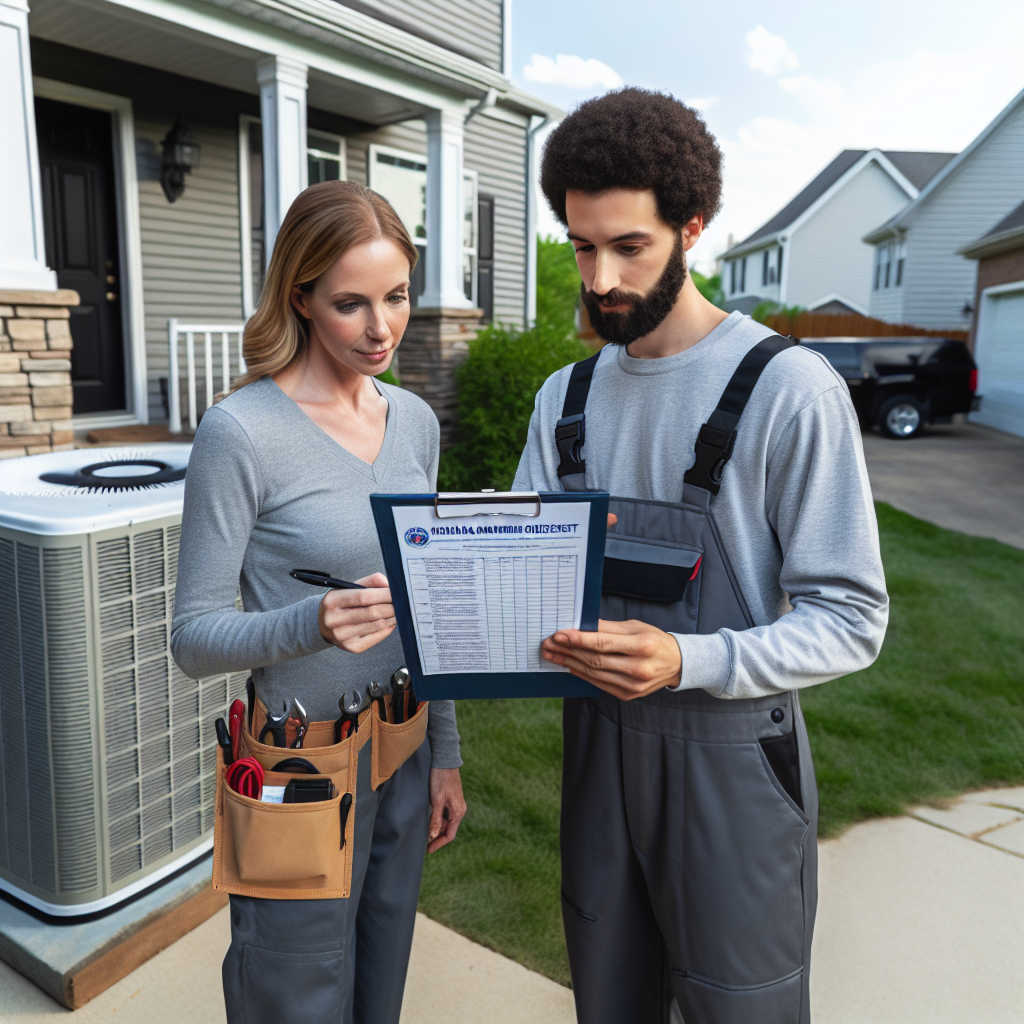
Straight to the point: a professional hvac service visit is a controlled troubleshooting process, not a parts swap. The technician will confirm the symptom, secure the system for safe testing, run targeted diagnostics, and deliver a written scope with prioritized repair options.
Technicians begin with context. They review system nameplate data and the homeowner notes or photos you provided, verify recent maintenance from a maintenance plan if available, and confirm safety conditions. That preparation is why the photos and runtimes you collected earlier speed the whole visit and often prevent a second trip.
Typical diagnostic workflow
- Safety and baseline: confirm power, gas shutoffs, carbon monoxide status, and clear workspace.
- Visual triage: inspect coils, wiring, control boards, condensate paths, and duct connections for obvious failures or corrosion.
- Electrical and motor checks: use a multimeter and ESR tester on capacitors, measure motor currents, and check contactors and relays.
- System performance tests: measure airflow or static pressure where relevant, use manifold gauges for refrigerant pressures, run a combustion analysis on gas equipment.
- Diagnosis and options: document failing components, outline immediate repairs to restore safe operation, and list replacement options if the unit is near end of life.
Tradeoff to expect: many repairs fall into two categories – quick restore versus planned replacement. Quick restores, like capacitor or contactor swaps, are inexpensive and often performed same day. Major failures such as compressor or heat exchanger problems usually require ordering parts and scheduling a follow up. Accepting a temporary restore can buy time, but it may increase long term cost if the system is old.
Practical limitation: accurate refrigerant diagnosis requires the system to be under realistic load. A technician may need to run the unit 15 to 30 minutes and verify outdoor conditions. If the equipment has been off or the home is not at typical temps, the tech may recommend returning during peak conditions or scheduling a controlled test.
Concrete Example: A homeowner reported intermittent AC shutdowns. The technician used an ESR meter to confirm a failing run capacitor, backed that with motor current readings, and replaced the capacitor that same visit. Because the owner sent a photo of the outdoor unit nameplate ahead of time, the tech brought the correct part and avoided a second trip.
Judgment homeowners miss: ask the technician to show the failing measurement. Vendors who decline to share test readings are more likely to suggest unnecessary component replacement. Certified technicians will explain their findings and, when relevant, reference standards such as NATE or ACCA procedures; see NATE for certification context.
Next consideration: when you accept work, confirm whether the diagnostic fee is credited toward repair, and ask for a clear timeline for any parts that must be ordered. That keeps expectations realistic and reduces the chance of surprise after the technician leaves.
Common repairs, typical replacement thresholds, and example cost ranges
Straight answer: most service calls are small repairs that restore operation, but a minority of failures justify replacement because the remaining life and efficiency gains make replacement the better economic choice. Repairs like capacitors or contactors are inexpensive and frequently done same day; major failures such as a seized compressor or cracked heat exchanger are expensive and often trigger the replacement conversation.
How to decide repair versus replace
Rule of thumb: if a single repair costs more than about half the installed price of a comparable new unit, or the system is older than its expected service life, replacement is usually the right call. Expected service life in the field is typically 12 to 15 years for central air conditioners and 15 to 20 years for furnaces. Also factor in how often you are calling for service – two or more major repairs in 12 months is a strong signal to replace.
| Repair or action | Typical mid-Atlantic cost range | When it usually makes sense to replace instead |
|---|---|---|
| Capacitor or contactor replacement | $100 – $400 | Rarely replace unless repeated electrical failures or aged compressor |
| Refrigerant recharge and leak repair | $150 – $400 | Replace if leak recurs or system is older than 10-12 years |
| Thermostat replacement or upgrade | $100 – $300 | Replace only with full system replacement if adding zoning or incompatible controls |
| Blower motor replacement | $300 – $900 | Replace if multiple motor or control failures or poor compatibility with new filters |
| Compressor replacement | $1,200 – $3,000 | Often replace entire condensing unit unless indoor coil and cabinet are modern and matched |
| Heat exchanger repair or replacement | $1,000 – $3,000 | Replace furnace whenever heat exchanger is cracked or safety-related failures occur |
Practical caveat: those ranges exclude emergency after-hours premiums, major panel wiring, structural repairs for duct access, and permit or disposal fees. Brand and part availability matter – OEM parts for legacy Trane or Carrier equipment can be pricier than for Goodman or Rheem. Also check whether the repair keeps your system within the original warranty window or voids expected coverage.
Concrete example: an Allentown homeowner had a compressor fail. The compressor replacement quote was about $2,200 but the outdoor unit and indoor coil were 14 years old with two prior refrigerant repairs in the last 18 months. The technician recommended a full AC replacement because paying for the compressor would leave an inefficient, mismatch-prone system with a high chance of another major repair the next season.
Deeper judgment: replacing just the compressor or outdoor section can be economical for newer, matched systems; doing that on an aged, mismatched setup often creates poor efficiency, louder operation, and warranty problems. When evaluating estimates, insist on itemized costs, ask whether parts are OEM, and check for available utility or manufacturer rebates that change the math for installing higher efficiency equipment. For seasonal scheduling and to avoid peak delays, see the maintenance plans that local contractors offer.
Preventive maintenance plan components and seasonal timing
Hard reality: a maintenance plan is a risk-management tool, not a miracle. Proper preventive hvac service reduces midseason failures, keeps efficiency closer to design, and shortens emergency response times. It will not guarantee zero failures on old equipment, but it materially lowers the odds of a costly mid-summer or mid-winter breakdown.
Core components of an effective preventive plan
Visual and mechanical inspection: technicians check electrical connections, contactors, fan motors, belts where applicable, and the condition of coils and fins. This finds early wear and safety risks before parts fail.
Airflow and filtration program: scheduled filter swaps matched to your system and occupancy, plus static pressure checks or return inspection to verify the blower operates within safe limits. High-efficiency filters help indoor air quality but must be validated against blower capacity.
Coil, condensate, and drainage service: cleaning condenser and evaporator coils, flushing or clearing condensate traps and drain lines, and verifying pan integrity to prevent water damage and microbial growth.
Fuel and combustion safety checks: for furnaces and boilers technicians perform combustion analysis, heat rise checks, and safety control testing to catch problematic burners or venting before they produce carbon monoxide or soot.
Performance verification: refrigerant charge check when running under load, measured temperature splits, and a brief runtime test to confirm the system meets expected cooling or heating output.
Documentation and prioritization: a written report with measured values, recommended repairs, and a priority flag for items likely to fail soon. Maintenance plans that include priority scheduling materially shorten wait time during peak outages.
| Season | Priority tasks | Who should press this |
|---|---|---|
| Early spring | Clean condenser coil, verify refrigerant under load, test thermostat and controls | Homes with high summer cooling use and those on older systems |
| Late spring – early summer | Check condensate paths, run dehumidification check, confirm airflow | Humid homes and houses with basements or finished spaces below ducts |
| Early fall | Combustion analysis, burner service, inspect flue and safety switches | Homes using gas or oil heat, and older furnaces |
| Late fall – pre-winter | Verify heat delivery, safety limits, and thermostat calibration | Households with vulnerable occupants or long winter outages risk |
Concrete example: A Northampton County homeowner signed up for a seasonal plan that included documented spring and fall visits. During the spring inspection the technician discovered a partially clogged condensate line and an aging fan capacitor. Clearing the drain and swapping the capacitor during that visit avoided a weekend outage during a heat wave and prevented water staining in the attic.
Tradeoff and judgment: cheaper maintenance contracts often cover only basic checks and filter swaps. Those reduce call volume but miss problems that require coil cleaning or refrigerant diagnosis. For households that cannot tolerate downtime or have older equipment, invest in the fuller plan that includes performance tests and priority response. For lighter-use systems, a minimal plan still beats no plan at all.
Next consideration: choose a plan that bundles written results and credits the diagnostic fee toward repairs. For local options and documented plans see maintenance plans. For national guidance on recommended intervals and indoor air quality, consult Energy Star.
How to choose a qualified local HVAC contractor in Lehigh and Northampton County
Start with this: hiring the right local HVAC contractor is more about predictable outcomes than price alone. In Lehigh and Northampton County the difference between a competent crew and a marginal one shows up as correct diagnostics, proper permitting, and a clear warranty when work is finished. Cheap answers that rely on guesswork almost always cost more later.
Essential verifications before you book service
Verify three categories: credentials, capacity, and contracting practices. Credentials include a valid Pennsylvania trade license where required, general liability and workers compensation insurance, and technician certifications such as NATE. Capacity means local parts inventory, trucks stocked for common HVAC repair items, and a stated emergency HVAC service window. Contracting practices cover written estimates, itemized invoices, permit handling, and clear warranty language.
| Question to ask | Red flag answer |
|---|---|
| Can you provide your license number and insurance certificate? | Hesitation or vague proof; only produces paperwork after work begins |
| What is your emergency response window and is it tied to a maintenance plan? | No defined window or refuses same day/24 hour options for urgent hazards |
| Will the estimate be itemized and include warranty terms? | Verbal price only or no written scope of work |
| Are your technicians NATE certified or manufacturer trained for my brand? | Claims of experience but no certifications or training records |
| Who pulls permits and handles inspections? | Says permits are homeowner responsibility or avoids mentioning them |
Practical tradeoff: a vendor with higher hourly rates but a stocked truck and clear warranty will usually save money compared with a low bid that requires multiple return trips. Also, OEM parts can cost more but reduce mismatch and warranty headaches; aftermarket parts cut upfront cost but can create serviceability problems on some brands. Decide which risk you prefer and document it in writing.
Judgment most homeowners miss: certifications matter but do not replace local track record. A NATE certified technician who rarely works in the Lehigh Valley climate or on older furnaces may still struggle with region specific venting or common manufacturer quirks. Prefer contractors who can show recent local projects, references, and clear before and after documentation.
Concrete example: A homeowner in Allentown compared two quotes for an AC installation. The low bid used non OEM coil parts and omitted local permit fees. The higher bid included permit handling, documented matching of indoor coil and condenser, and a two year parts warranty. When a noise issue appeared the first company required separate service calls and extra fees, while the second company handled the follow up under warranty with one visit.
- Check recent work: ask for two local references from the past 12 months and pictures of the completed work.
- Review paperwork: confirm diagnostic fees are credited toward repair and whether a maintenance plan reduces emergency rates; see maintenance plans.
- Confirm follow up: get the expected timeline for parts and a stated emergency HVAC service response time in writing.
Next step: collect three written estimates, compare them by scope not just price, check BBB and Google reviews for local complaints, and choose the contractor that pairs transparent diagnostics with a reasonable emergency response promise. If you want a shorter path to reliability, prioritize firms that offer documented maintenance plans and clear warranty coverage for residential HVAC service and AC installation.
Frequently Asked Questions
Straight answer up front: homeowners ask the same set of operational and safety questions because those answers change how fast they need to call a technician and how much they will pay. The short answers below are practical—follow the actions, not the platitudes.
Concise answers homeowners actually use
- How often should I have a pro inspect my system? Aim for one professional inspection before each season shift—get the cooling system looked at before you need it and the heating system checked before cold weather. High-use homes, households with pets, or systems older than a decade often benefit from an extra mid-season check.
- What counts as an HVAC emergency versus a routine call? If the issue poses safety risks, threatens water damage, or leaves occupants at health risk in extreme heat or cold, treat it as an emergency. Performance declines, odd noises, or higher bills are urgent but can be scheduled during business hours unless they rapidly worsen.
- Can I recharge refrigerant myself? No. Handling refrigerant requires certified equipment and training under federal rules; attempting a DIY recharge usually masks leaks and can damage the compressor. For regulatory context see EPA indoor air quality guidance.
- How do I know if the heat exchanger is compromised? Look for persistent soot, discolored burner flames, unexplained CO alarm triggers, or combustion smells. Those signs require a professional combustion test and should not be delayed.
- What must be on a proper written repair estimate? A good estimate lists parts and labor separately, identifies whether OEM or aftermarket parts are used, states warranty terms and who handles permits, and gives an expected timeline for parts and completion.
- Are maintenance agreements worth the money? They are when you value fewer emergency calls and priority scheduling. Basic plans lower the odds of midseason failures; comprehensive plans that include performance tests and coil service are worth the premium for older systems or homes where downtime is costly.
- How fast can a local tech respond in Lehigh or Northampton County? Response windows depend on season and provider capacity; reputable local firms publish same day or 24-hour emergency options. Confirm expected arrival time when you call and whether the provider prioritizes plan members.
Practical nuance: smart thermostats and home automation often get blamed for HVAC faults but they more commonly reveal latent mechanical problems. Before you assume the system is broken, switch the thermostat to a basic mode or the unit’s manual settings to isolate whether the problem is control-related or mechanical.
Concrete Example: An Emmaus homeowner replaced an old programmable thermostat with a Wi-Fi model and then noticed erratic cycling. The contractor temporarily reverted the system to the old-style control and confirmed the short cycling persisted; the real issue was a failing blower motor. Diagnosing controls separately saved an unnecessary thermostat replacement and directed repairs to the correct component.
Commercial versus residential expectations: small property managers should expect different lead times and service scopes. Commercial units often require planned downtime, lift equipment, and factory-trained techs; ask providers whether they offer separate commercial HVAC service or scheduled maintenance blocks to avoid disrupting tenants.
Judgment most homeowners miss: insist on test data. Technicians should show measured readings that support their recommendation. Vendors who provide only anecdote or a single line item without measurements are more likely to push unnecessary replacements. If you want credentials, ask whether technicians are NATE certified and whether the company will use OEM parts when you are under manufacturer warranty; see NATE for certification context.
Concrete next steps you can use right now: 1) Photograph your indoor unit and outdoor condenser nameplates and save them in one folder, 2) Log symptom start times and any temporary fixes you tried, 3) When you call a contractor, ask if the diagnostic fee is credited toward repairs and whether they carry the likely parts on their truck. These three actions reduce cost, speed repair, and limit repeat visits.